For many businesses, lease agreements are among their largest financial commitments after payroll. Yet lease information often sits across spreadsheets, emails, shared drives, and paper documents. As lease portfolios grow, managing critical dates, rent escalations, renewals, amendments, and compliance requirements becomes increasingly complex. This is where lease management plays a crucial role.
What Is Lease Management?
Lease management is the process of tracking, administering, and optimizing lease agreements throughout their lifecycle. It involves managing everything from lease negotiations and document storage to rent payments, renewals, compliance, reporting, and lease accounting.
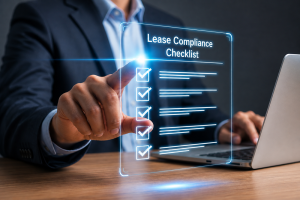
Often referred to as lease administration, lease management ensures that businesses maintain complete visibility over their lease obligations while reducing risks and controlling occupancy costs. Whether an organization manages office spaces, retail outlets, warehouses, or industrial facilities, effective lease management helps ensure that no critical obligation or opportunity is missed.
Why Is Lease Management Important?
As organizations expand across multiple locations, lease portfolios become increasingly difficult to manage manually. A single missed renewal date, rent escalation, or compliance requirement can lead to unnecessary expenses and operational disruptions.
Effective property lease management helps businesses:
- Maintain accurate lease records
- Track key dates and obligations
- Avoid missed renewals and penalties
- Improve lease accounting compliance
- Reduce occupancy costs
- Support better real estate decisions
- Enhance audit readiness
Key Activities Involved in Lease Management
A successful lease management process spans the entire lease lifecycle.
1. Lease Negotiation and Execution
The process begins with evaluating lease terms, negotiating commercial clauses, obtaining approvals, and executing agreements. Once finalized, lease documents must be securely stored and indexed for future reference.
2. Lease Administration and Tracking
This stage involves ongoing lease administration, including monitoring rent schedules, escalation clauses, maintenance obligations, security deposits, amendments, and critical dates such as renewals or expirations.
3. Lease Accounting and Compliance
Organizations must calculate lease liabilities, right-of-use assets, depreciation, and interest expenses while maintaining compliance with applicable accounting standards. Accurate lease data is essential for reliable financial reporting and audits.
4. Renewal, Renegotiation, or Termination
As leases approach expiration, businesses evaluate whether to renew, renegotiate terms, consolidate locations, or exit the property altogether. Proper planning helps organizations avoid costly last-minute decisions.
Common Challenges in Lease Administration
Many businesses still rely on spreadsheets and manual processes for lease administration, creating several challenges:
- Lease documents stored across multiple locations
- Difficulty tracking amendments and renewals
- Limited visibility into rent escalations
- Inaccurate lease accounting calculations
- Missed compliance deadlines
- Time-consuming audit preparation
- Lack of portfolio-wide reporting
As lease portfolios grow, these challenges become harder to manage and can expose businesses to financial and compliance risks.
What Is Lease Management Software?
As lease portfolios grow, managing lease agreements manually through spreadsheets, emails, and shared folders becomes increasingly challenging. Critical information such as rent escalations, renewal dates, amendments, payment obligations, and compliance requirements can easily be overlooked.
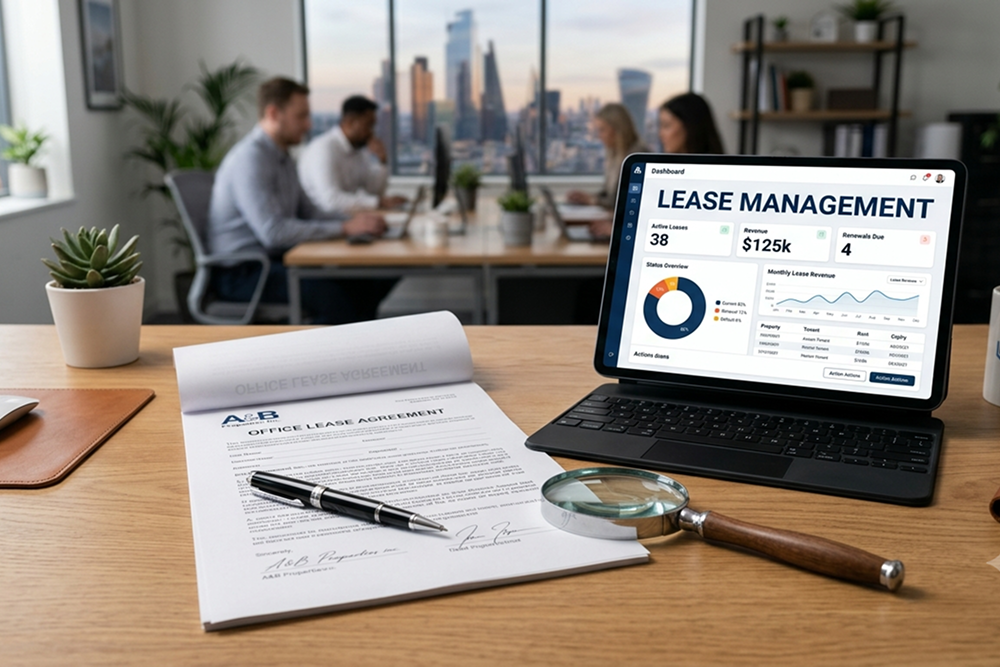
Lease management software is a centralized digital platform that helps businesses store, track, manage, and monitor lease agreements throughout their lifecycle. It provides a single source of truth for all lease-related information, enabling organizations to maintain visibility over their lease portfolio while reducing administrative effort and compliance risks.
How CRE Lease Matrix Helps
CRE Lease Matrix is a comprehensive lease management platform designed to help organizations digitize, centralize, and manage their entire lease portfolio from a single system.
Lease Abstraction
CRE Lease Matrix extracts key lease information such as rent schedules, escalation clauses, renewal options, lock-in periods, security deposits, and payment terms from lease documents. A maker-checker validation process ensures the data is accurate and reliable.
Centralized Lease Repository
All lease agreements, amendments, addendums, and supporting documents are securely stored in one platform. This eliminates the need to search across multiple folders, emails, and spreadsheets.
Automated Alerts and Reminders
The platform automatically tracks lease expirations, renewals, notice periods, rent escalations, and other critical milestones. Timely notifications help teams avoid missed deadlines and costly oversights.
End-to-End Lease Administration
CRE Lease Matrix streamlines lease administration by helping businesses manage obligations, amendments, payments, deposits, and lease-related activities throughout the lease lifecycle.
Lease Accounting Support
Structured lease data supports compliance with accounting standards such as Ind AS 116. Accurate lease information improves reporting quality and helps organizations stay compliant with accounting standards.
Portfolio Visibility and Analytics
Interactive dashboards and reports provide real-time visibility into lease commitments, occupancy costs, upcoming liabilities, renewals, and portfolio performance.
Smart Asset and Contact Directories
The platform maintains detailed information on assets, units, landlords, tenants, and vendors, creating a centralized source of truth for all lease-related data.
By combining lease data centralization, automation, reporting, and compliance support, CRE Lease Matrix helps organizations improve operational efficiency, reduce compliance risks, and gain complete visibility over their lease portfolio.
As real estate portfolios become more complex, lease management has evolved beyond a routine administrative task. It is now a critical business function that helps organizations control occupancy costs, maintain compliance, and make data-driven real estate decisions.
By implementing structured lease administration processes and leveraging modern lease management services, businesses can centralize lease data, automate key workflows, and improve portfolio visibility. Investing in effective property lease management practices and the right lease management software enables organizations to reduce risks, improve operational efficiency, and unlock greater value from their real estate portfolio over the long term.
Discover how CRE Lease Matrix can help you simplify lease administration, strengthen compliance, and unlock greater value from your real estate portfolio.