
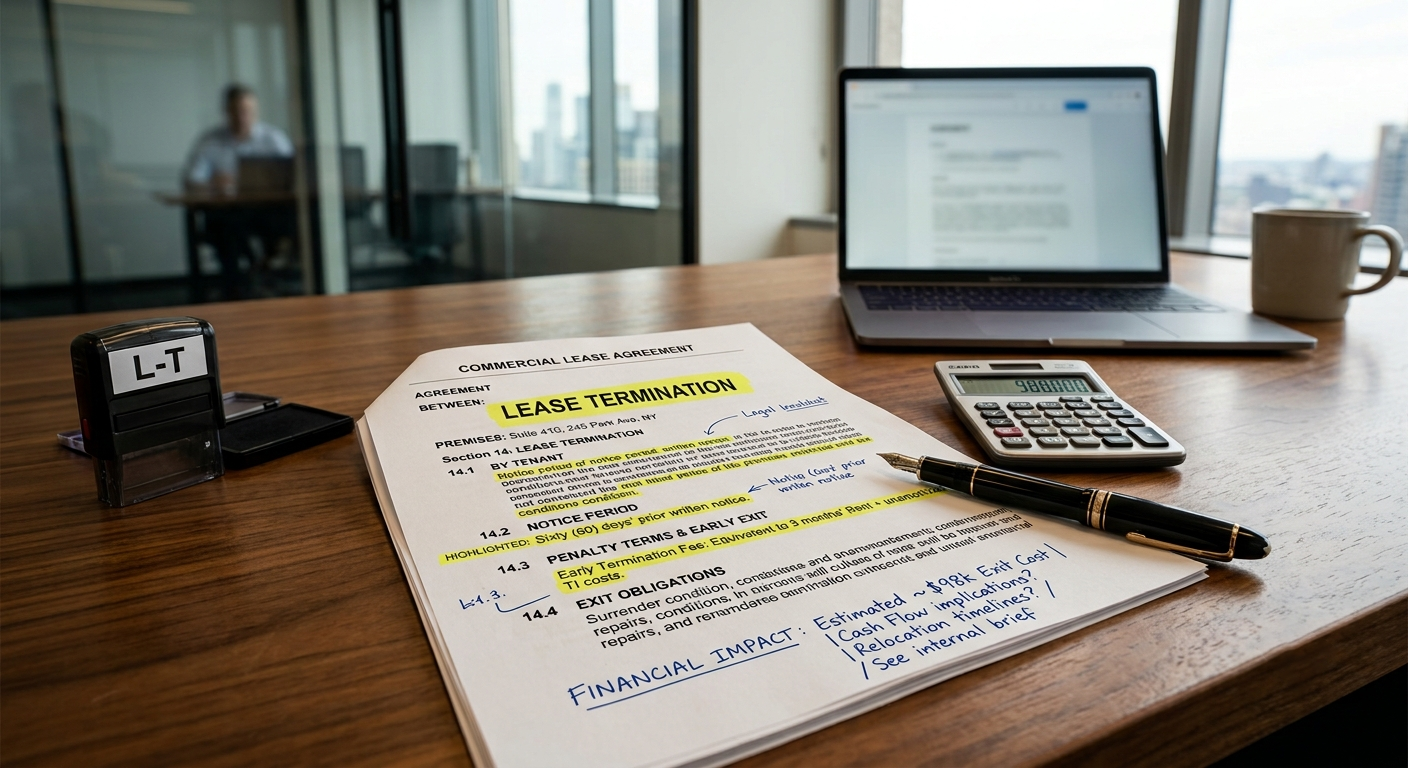
Commercial leases are long-term commitments that define financial obligations, operational flexibility, and legal responsibilities. Among all lease provisions, termination clauses are often overlooked until a business needs to relocate, expand, downsize, or exit a property. Missing or misunderstanding these clauses can lead to unexpected costs, legal disputes, or operational disruptions.
Whether you’re an occupier managing multiple office locations, a retailer expanding across cities, or a landlord overseeing a large portfolio, understanding lease termination clauses can help you avoid unexpected costs, legal disputes, and business disruptions.
What Is a Lease Termination Clause?
A lease termination clause outlines the conditions under which either the landlord or tenant can legally end a lease before its scheduled expiry. It specifies the circumstances, notice periods, penalties, and responsibilities associated with ending the agreement.
Termination clauses vary from one lease to another. Some provide flexibility through early-exit options, while others impose strict financial or legal conditions before termination is permitted.
Understanding these terms before signing a lease helps businesses evaluate long-term risks and avoid unexpected liabilities.
What Is a Notice of Termination of Lease?
A notice of termination of lease is a formal written notice that informs the landlord or tenant that the lease will end. It must be sent within the notice period mentioned in the lease agreement. The notice usually includes the termination date, property details, and any conditions that must be met before vacating the premises. Sending a notice of termination of lease on time helps businesses avoid legal disputes, unexpected costs, and automatic lease renewals.
Why Lease Termination Clauses Matter for Businesses
A lease is more than an occupancy agreement. It directly affects business continuity and financial planning. Poor visibility into termination provisions can create serious operational challenges.
Some common business impacts include:
- Unexpected termination penalties
- Missed notice deadlines
- Continued rent obligations
- Legal disputes with landlords
- Delays in relocation or expansion plans
- Difficulty managing multiple leased properties
For organizations managing large lease portfolios, manually tracking these obligations across spreadsheets and documents increases the likelihood of costly errors.
Common Types of Lease Termination Clauses
Different commercial leases include different termination provisions depending on the negotiation between the landlord and the tenant.
Early Termination Clause
Allows one or both parties to end the lease before expiry, usually after fulfilling notice requirements or paying an agreed termination fee.
Mutual Termination
Both parties agree to terminate the lease under mutually accepted terms.
Default-Based Termination
A lease may be terminated if either party breaches important contractual obligations, such as non-payment of rent or failure to maintain the premises.
Force Majeure or Exceptional Circumstances
Certain leases include provisions allowing termination during extraordinary events that prevent normal business operations.
Redevelopment or Demolition Clauses
Property owners may retain the right to terminate leases if the property undergoes redevelopment or major structural changes.
Understanding which clause applies is essential before making strategic business decisions.
Challenges of Managing Lease Termination Across Multiple Locations
Lease termination clauses aren’t standardized. Every lease can have different notice periods, exit conditions, penalty structures, and obligations. For organizations managing dozens or hundreds of leases, manually tracking these variations becomes a significant operational challenge.
Without a centralized lease management system, businesses often face issues such as:
- Overlooking contractual notice periods, resulting in automatic lease renewals or extension of tenancy.
- Missing early termination rights, forcing businesses to continue paying rent even when relocation or consolidation is planned.
- Failing to meet exit obligations, such as reinstatement, handover conditions, or settlement of outstanding charges.
- Spending valuable time reviewing lengthy lease documents every time a termination decision needs to be made.
- Limited portfolio visibility makes it difficult for legal, finance, and real estate teams to coordinate termination decisions across multiple locations.
As lease portfolios expand across cities, business units, and asset types, these challenges become increasingly difficult to manage through spreadsheets and manual tracking, exposing organizations to unnecessary financial, legal, and operational risks.
How CRE Lease Matrix Simplifies Lease Termination Management
Managing the termination of leases across multiple properties can be complex, especially when businesses rely on spreadsheets, emails, and scattered lease documents. Missing a notice period or overlooking a key lease termination clause can result in unnecessary costs, legal disputes, or automatic lease renewals.
CRE Lease Matrix simplifies lease termination management by centralizing all lease information on a secure platform. The software automatically tracks termination notice periods, critical lease milestones, and contractual obligations while sending timely reminders to ensure important deadlines are never missed. With instant access to lease documents and termination-related clauses, businesses can quickly review their rights, obligations, exit conditions, and financial commitments before making lease termination decisions.
By providing complete visibility into every lease from a single dashboard, CRE Lease Matrix helps organizations stay compliant, reduce administrative effort, minimize legal and financial risks, and confidently manage lease exits across their entire portfolio.
Managing lease terminations shouldn’t involve searching through documents or worrying about missed deadlines. CRE Lease Matrix gives you complete visibility into your lease portfolio, helping you stay compliant, reduce risk, and make faster, data-driven decisions. Book a demo today.