
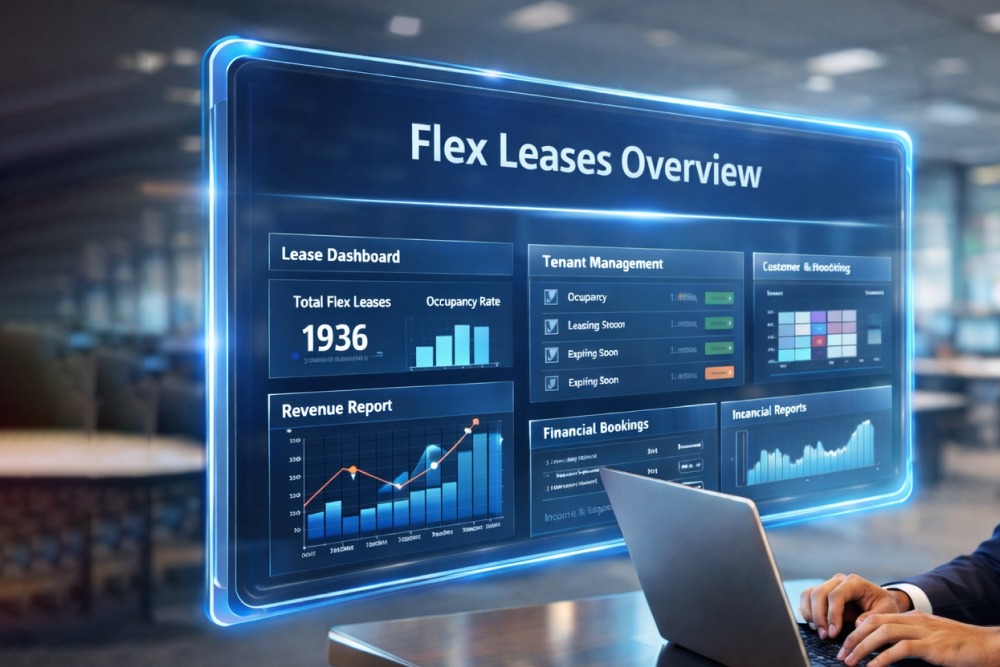
The rise of co-working has fundamentally reshaped how commercial real estate is leased, occupied, and managed. Unlike traditional office models built on long-term, fixed agreements, co-working operators thrive on flexibility, offering short-term memberships, dynamic pricing, and customizable spaces. While this agility is a competitive advantage, it also introduces significant complexity in lease management, especially as operators scale across multiple locations.
Understanding Flexible Leases in Coworking Spaces
Flexible leases are at the heart of the co-working model. Unlike conventional lease agreements, these arrangements can span anywhere from a few hours to several months, with little to no long-term commitment. This makes them especially attractive for freelancers, startups, and distributed teams seeking agility without the burden of fixed leases. Alongside workspace access, these offerings often include value-added amenities such as high-speed internet, meeting rooms, and collaborative environments.
While this flexibility drives demand, it also creates operational complexity. Managing constantly changing lease terms, pricing structures, and add-on services across multiple members can quickly overwhelm manual systems. As portfolios grow, relying on spreadsheets or fragmented lease data makes it increasingly difficult to maintain accuracy, efficiency, and control.
Balancing Long-Term Liabilities with Short-Term Revenue
At the core of this challenge is the mismatch between long-term liabilities and short-term revenues. Co-working operators typically sign multi-year leases with landlords, while their customers, freelancers, startups, and enterprises often commit for months, weeks, or even days. This creates constant pressure to optimize occupancy, manage cash flows, and ensure profitability across locations. Without a robust system in place, tracking these moving parts manually can quickly become unmanageable.
Centralizing Lease Data for Better Control
Lease management software plays a critical role in bringing structure and visibility to this complexity. It enables operators to centralize all lease-related data, from rental terms and escalation clauses to lock-in periods and renewal dates across their entire portfolio. Instead of relying on scattered spreadsheets or siloed teams, decision-makers gain a unified view of their obligations and opportunities.
Staying Ahead with Proactive Milestone Tracking
One of the biggest advantages of such software is proactive milestone tracking. Critical dates like lease expiries, rent escalations, and notice periods can significantly impact financial performance if missed. Automated alerts and dashboards ensure that teams stay ahead of these milestones, allowing them to renegotiate terms, plan exits, or optimize pricing strategies in advance.
Driving Financial Clarity Across Locations
Another key benefit lies in financial clarity. With multiple revenue streams and cost structures across locations, co-working operators need real-time insights into unit-level profitability. Lease management tools can integrate rental outflows with occupancy data, helping operators identify underperforming assets, benchmark performance, and make data-driven expansion or consolidation decisions.
Scaling Operations Without Losing Control
Scalability is another crucial factor. As operators expand into new cities or markets, the complexity multiplies—different landlords, varying lease structures, and diverse regulatory environments. A digital lease management platform standardizes processes, ensuring consistency while still allowing flexibility where needed. This becomes particularly important for enterprise-grade operators managing dozens or even hundreds of locations.
Enabling Cross-Team Collaboration
Additionally, these tools support better stakeholder collaboration. Leasing, finance, and operations teams can work off the same data, reducing miscommunication and improving execution speed. Whether it’s planning a fit-out, budgeting for upcoming escalations, or evaluating a renewal, everyone operates with the same source of truth.
How CRE Lease Matrix Supports Co-Working Operators?
CRE Lease Matrix offers a purpose-built solution for managing lease complexity at scale. It consolidates all lease agreements into a single platform, enabling co-working operators to track critical milestones, monitor financial obligations, and gain portfolio-wide visibility in real time. By turning fragmented data into actionable insights, CRE Lease Matrix empowers operators to stay ahead of risks, improve negotiation outcomes, and scale with confidence.
Discover how you can manage flexible leases with precision, reduce risk, and scale confidently. Book a demo today!