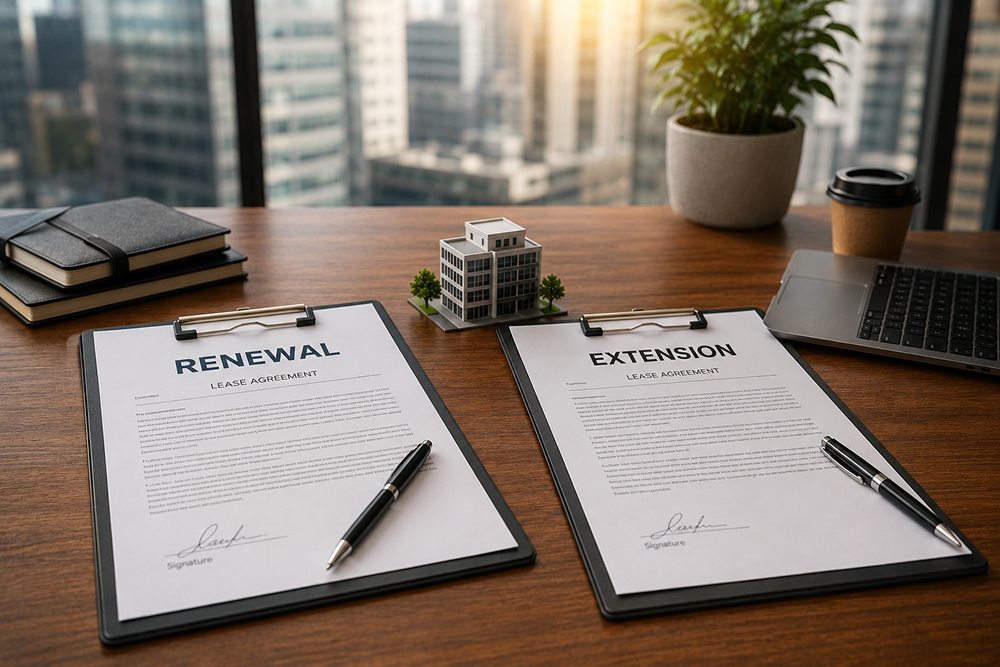
Lease renewals and lease extensions may sound similar, but they serve very different purposes in lease management. While the two terms are often used interchangeably, they have distinct legal and operational implications that can impact rent negotiations, occupancy planning, and long-term financial commitments.
Whether you are a landlord, retailer, office occupier, or financial institution, knowing when to renew or extend a lease can help you make informed real estate decisions.
What is a Lease Renewal?
A lease renewal occurs when an existing lease agreement expires, and both parties decide to enter into a new lease contract. The renewed lease may contain updated terms, revised rental rates, altered lock-in periods, or modified maintenance clauses.
In simple terms, a lease renewal replaces the old agreement with a new one.
Key Characteristics of Lease Renewal:
- A new lease agreement is created
- Terms and conditions can be renegotiated
- Rental value is usually revised based on market conditions
- Fresh registration or documentation may be required
- Security deposits and escalation clauses may change
Example:
A retail brand operating in a shopping mall reaches the end of its 5-year lease. The landlord and tenant renegotiate the rent, increase the lease term to 7 years, and revise the escalation percentage. This is considered a lease renewal.
What is a Lease Extension?
A lease extension, on the other hand, continues the existing lease agreement for an additional period without replacing the original contract. The majority of the original terms remain unchanged unless specifically amended.
Rather than creating a new lease, the parties simply extend the duration of the current agreement.
Key Characteristics of Lease Extension:
- Existing lease agreement continues
- Minimal changes to terms and conditions
- Faster and simpler process
- Usually executed through an addendum or extension letter
- Helpful when both parties are satisfied with existing terms
Example:
An office occupier has a lease expiring in six months but wishes to continue for another year under the same rental terms. The landlord agrees, and both parties sign a lease extension addendum. This is a lease extension.
Which Option is Better for Businesses?
The right option depends on business objectives, market conditions, and operational flexibility.
Choose Lease Renewal When:
- Market conditions favor renegotiation
- Businesses require revised lease terms
- Expansion or redesign plans are involved
- Rental benchmarking is necessary
Choose Lease Extension When:
- Existing terms are favorable
- Businesses need short-term continuity
- Occupancy disruption must be avoided
- Faster approvals are preferred
For large enterprises managing multiple properties, manually tracking renewal dates, escalation clauses, and extension timelines can be difficult. Missing critical deadlines may lead to financial losses, legal complications, or operational disruption.
How CRE Lease Matrix Simplifies Lease Renewals and Extensions?
CRE Lease Matrix helps businesses streamline both lease renewals and lease extensions through a centralized, data-driven lease management platform. The platform enables occupiers and landlords to track upcoming expiry dates, automate alerts for renewals and rent escalations, and maintain complete visibility across their lease portfolio from a single dashboard.
For lease renewals, CRE Lease Matrix supports better decision-making by providing access to historical lease data, rental benchmarks, and portfolio-level analytics. This allows businesses to evaluate existing lease terms against current market conditions and negotiate more effectively.
For lease extensions, the platform simplifies continuity by ensuring all existing lease terms, extension clauses, and documentation are easily accessible and systematically managed. Automated reminders and centralized records help businesses avoid delays, reduce manual dependency, and execute extensions faster with minimal operational disruption.
By digitizing lease administration and improving visibility into critical lease events, CRE Lease Matrix helps organizations manage renewals and extensions more efficiently while strengthening compliance, cost control, and long-term portfolio planning.
Although lease renewal and lease extension may appear similar, they serve different strategic purposes. A lease renewal offers flexibility to renegotiate and restructure agreements, while a lease extension provides continuity with minimal changes.
Transform the way you manage lease renewals and extensions with intelligent lease administration and analytics.